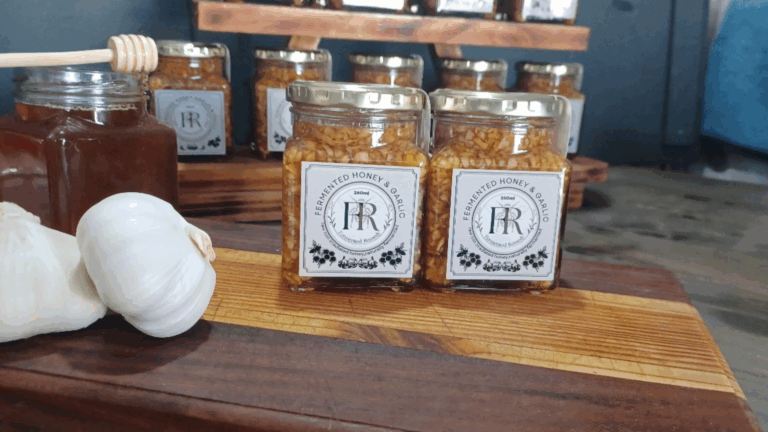
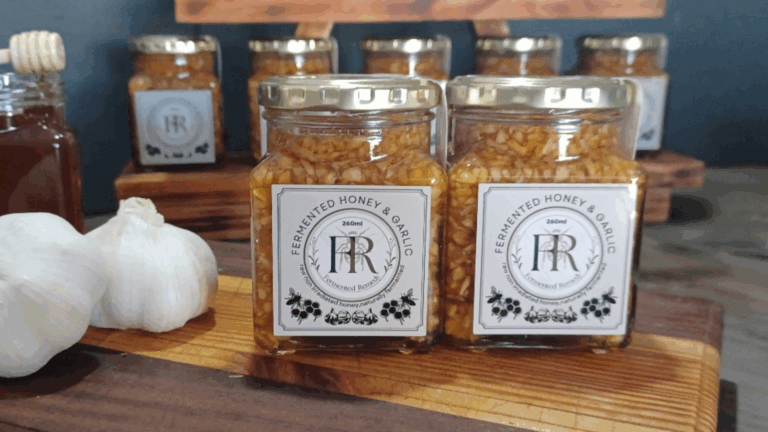
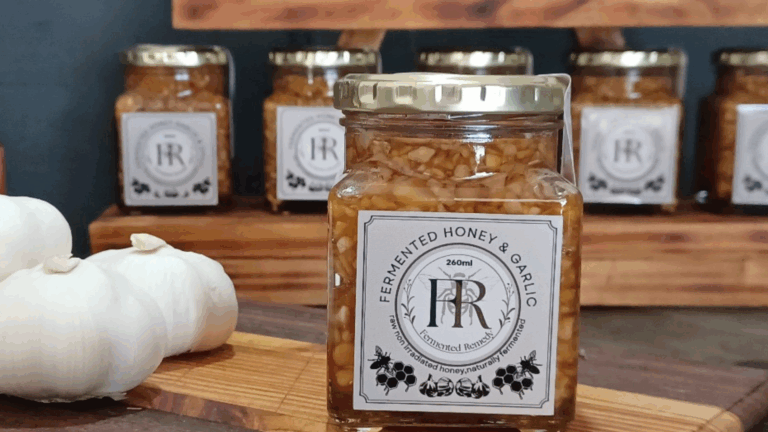
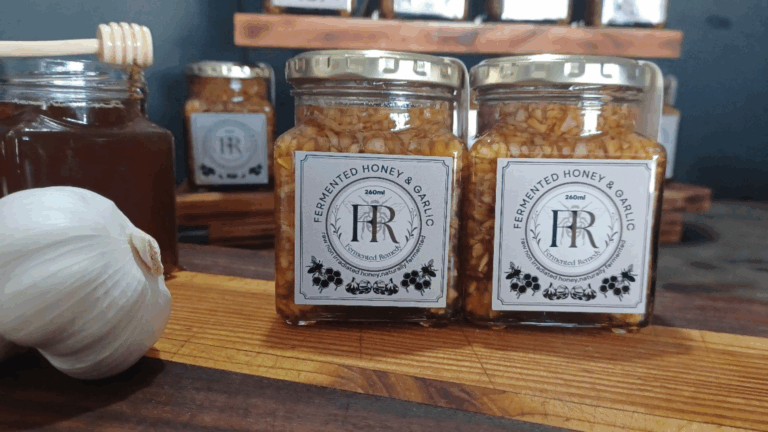
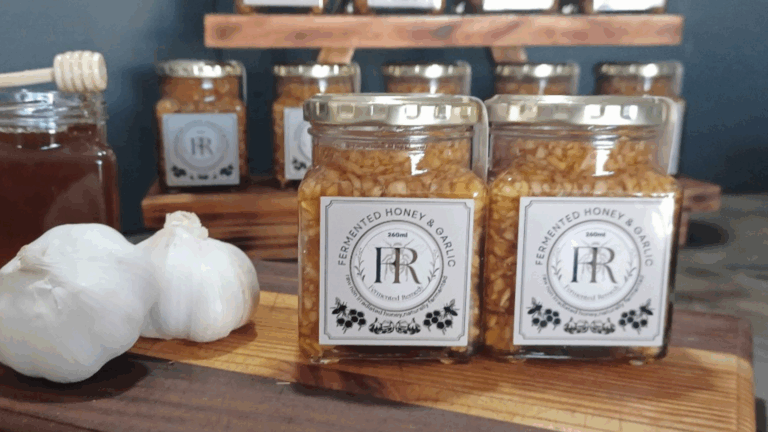

Fermenting raw wildflower honey with fresh garlic
Fermenting garlic in raw honey typically involves lactic-acid bacteria and wild yeasts from the garlic/honey; fermentation changes the chemistry of garlic (can increase some antioxidants and form different, often more stable bioactive) and makes the honey runnier and more “active.” Evidence for unique, clinically proven health benefits of the combo is limited — benefits are mostly inferred from known properties of honey, garlic, and fermented garlic products.
Safety: do not give to infants <12 months (botulism risk via honey). People on blood thinners, with certain medical conditions, or with diabetes (honey’s sugars) should take care and check with a clinician. Also follow good fermentation hygiene and consider simple safety checks (pH, smell).
1) What each ingredient contributes (mechanisms)
Raw wildflower honey
High sugar / low water activity → strong osmotic pressure that inhibits many microbes.
Contains polyphenols and flavonoids that act as antioxidants and anti-inflammatory agents; many clinical and lab studies show honey’s wound-healing, antimicrobial and antioxidant effects.
Fresh garlic
When crushed, enzyme alliinase converts alliin → allicin, a reactive sulphur compound with antimicrobial, antioxidant and some cardiovascular effects (blood pressure, lipids, endothelial function). Aged or fermented garlic can contain different stable compounds (S-allyl cysteine, nitric-oxide related metabolites) with measurable physiological effects.
What fermentation adds
Lactic acid bacteria (LAB) and wild yeasts present on garlic and in raw honey consume sugars and produce acids (lactic acid), CO₂ and other metabolites. This can:
Lower pH and create antimicrobial organic acids (helpful barrier).
Transform garlic compounds into other bioactive molecules (e.g., some fermentation/aging increases certain antioxidants and produces stable sulphur compounds that may have cardiovascular or anti-inflammatory benefits).
Possible health benefits (what’s plausible vs. proven)
Plausible / mechanistic (good lab and food-science support)
Enhanced antimicrobial environment. Honey already inhibits many pathogens; fermentation adds acid and microbial metabolites that can broaden antimicrobial activity in the jar (useful topically or for sore-throat soothing).
Increased antioxidant or altered garlic bioactive. LAB fermentation / aging can increase levels of some antioxidant metabolites and convert unstable compounds to more stable, bioactive forms (e.g., S-allyl cysteine in aged garlic). That may enhance cardiovascular or anti-inflammatory effects compared with raw garlic alone.
Digestive / microbiome support (hypothesis). Fermented products often contain LAB or LAB metabolites; while fermented honey-garlic is not a standardized probiotic, the metabolic byproducts could modestly affect gut microbes or gut immunity. Evidence here is limited and mostly indirect.
Supported in humans but mostly for garlic (or aged garlic), not the combo
Cardiovascular support. Trials with aged garlic extract show modest blood-pressure and arterial-function benefits. Those are for standardized extracts or aged garlic products rather than home-ferments, but they indicate garlic’s fermented/aged derivatives can be beneficial.
Claims with weak or no direct clinical evidence
“Fermented garlic honey cures colds/flu” — widely promoted anecdotally, but there are no high-quality clinical trials proving the specific fermented honey garlic product prevents or cures respiratory infections. You can expect symptom relief (soothing throat, antimicrobial environment), but avoid absolute claims.
Practical uses & realistic benefits
Daily small doses (a teaspoon of honey or one clove in honey) is commonly used in folk practice for immune support or when you feel a cold coming on. This may help symptom relief (throat, cough) and provide some antimicrobial/anti-inflammatory support — but don’t treat it as a replacement for medical care.
Topical use: raw honey is used medically for wound care; fermented honey is not a sterile medical product, don’t substitute home ferments for clinically sterilized medical honey dressings.
Safety & contraindications (must-knows)
Infants: Never give honey to babies under 12 months, honey can carry C. botulinum spores that can cause infant botulism. This applies equally to fermented honey products.
Medical interactions: garlic (especially concentrated supplements) can interact with blood thinners (warfarin), some antiplatelet drugs, and might affect blood pressure or blood sugar. If you take anticoagulants, are scheduled for surgery, or have other serious conditions, consult your clinician before using daily therapeutic doses.
Diabetes / blood sugar: honey is high in sugars — use caution if you have diabetes; discuss with your healthcare provider.
Allergies / GI upset: garlic can cause heartburn, GI upset, or allergic reactions in some people.
Storage: Many sources store at cool room temp or refrigerate after the active phase. If you want to be conservative (and safer for longer storage), refrigerate after 2–4 weeks.
Evidence gaps & honest takeaways
There is good lab and clinical evidence for honey’s antimicrobial/antioxidant properties and for garlic/aged-garlic cardiovascular effects.
There are food-science studies showing fermentation/aging changes garlic chemistry (often beneficially) and that lactic acid bacteria are involved in garlic ferments. But high-quality clinical trials specifically testing fermented honey + garlic for prevention or treatment of infections, colds, chronic disease outcomes, etc., are lacking. Don’t overpromise clinical outcomes, treat it as a food-based supportive remedy, not a medicine backed by RCTs.
© 2025 Created & Designed by W.D.DESIGNZ