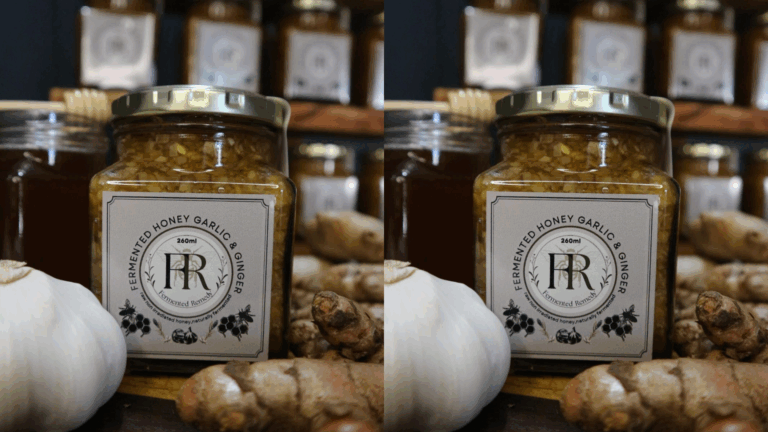
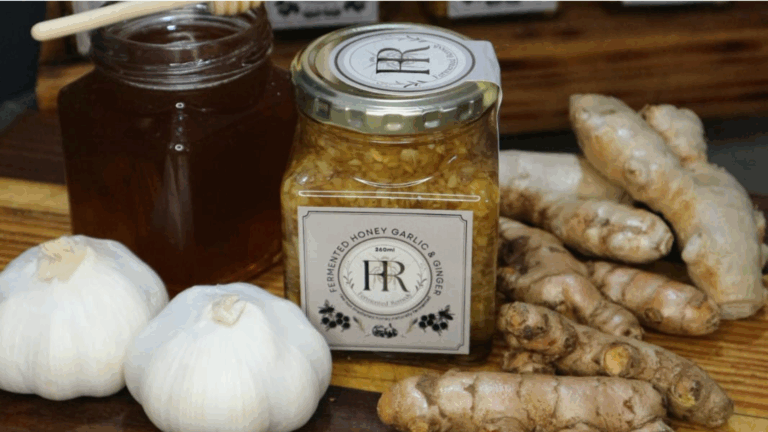
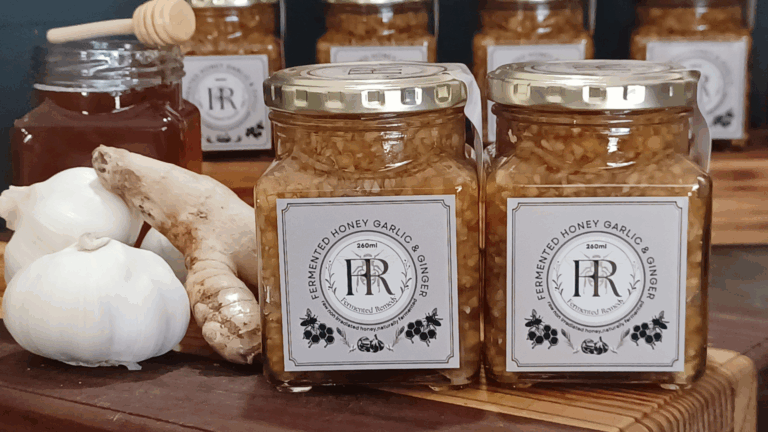
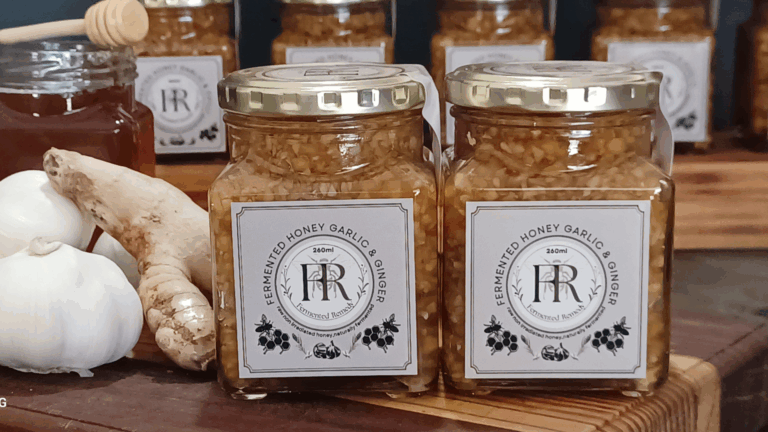
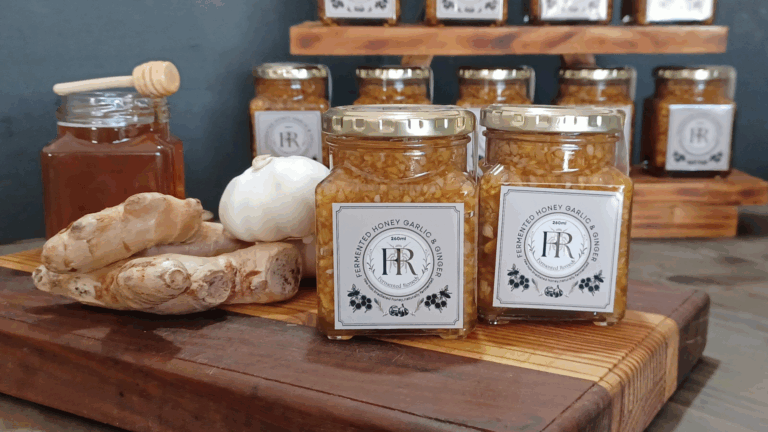
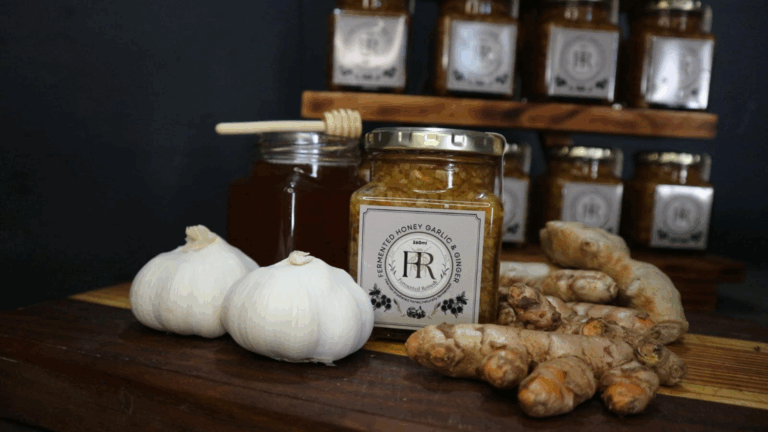
Fermented Raw Wildflower Honey with Fresh Garlic and Fresh Ginger together
What each ingredient contributes
Raw Wildflower Honey
Natural antimicrobial (osmotic effect, low pH, hydrogen peroxide).
Rich in polyphenols → antioxidant and anti-inflammatory.
Soothes throat, coughs, supports wound healing.
Fresh Garlic
Alliin → converted to allicin (antimicrobial, immune boosting).
Sulfur compounds (allicin, S-allyl cysteine, diallyl sulfides) support cardiovascular health, cholesterol, and blood pressure regulation.
Strong antimicrobial against bacteria, fungi, viruses.
Fresh Ginger
Gingerols (esp. 6-gingerol) → anti-inflammatory, antioxidant, digestive aid.
Converts partly into shogaols with time, heat, or fermentation → stronger antioxidant and anti-nausea properties.
Helps with nausea, digestion, circulation, and respiratory support.
What fermentation does
Natural microbes (lactic acid bacteria + yeasts) from garlic, ginger, and raw honey consume sugars → lactic acid, CO₂, organic acids.
Honey becomes thinner and tangy as pH lowers (safer environment).
Garlic allicin is unstable, but fermentation transforms it into more stable sulfur compounds (S-allyl cysteine, diallyl sulfides) → still bioactive, often with better antioxidant capacity.
Gingerols may partially transform into shogaols and other metabolites → often stronger anti-inflammatory & antioxidant activity.
The combo may boost antioxidant potential beyond the sum of parts.
Potential health benefits
Immune defense
Honey (antimicrobial + soothing) + garlic (antimicrobial, immune stimulation) + ginger (respiratory soothing, anti-inflammatory).
Traditionally used for cold/flu relief: sore throats, coughs, congestion.
Likely synergistic antimicrobial effects against bacteria, fungi, and viruses.
Anti-inflammatory & antioxidant
Polyphenols (honey) + sulfur compounds (garlic) + gingerols/shogaols (ginger).
Fermentation often increases antioxidant activity, giving stronger free-radical defense.
May reduce oxidative stress, support joint and cardiovascular health.
Digestive health
Ginger → nausea, bloating, gut motility.
Honey → prebiotic sugars for beneficial gut microbes.
Fermentation adds organic acids and possibly mild probiotic benefits.
Cardiovascular & metabolic support
Garlic → may lower blood pressure, improve lipid profile.
Ginger → circulation, mild blood sugar regulation.
Honey → natural energy source with lower glycemic impact than refined sugar.
Garlic + ginger is a classic Ayurvedic and folk combination: warming, circulation-enhancing, and immune-strengthening.
In honey, fermentation makes the mixture more palatable and bioactive.
Safety considerations
Infants <12 months: never give honey (botulism risk).
Blood thinners / surgery: both garlic and ginger can thin blood; caution if on anticoagulants.
Diabetes: honey is still sugar-heavy — moderate use only.
Heartburn / sensitive stomachs: ginger and garlic can irritate some people’s GI tract.
Practical uses
Daily tonic → 1 teaspoon on empty stomach (folk remedy for immune/circulation support).
Cold/flu relief → spoonful in warm water/herbal tea for sore throat & congestion.
Digestive aid → before meals to ease nausea/bloating.
Cooking → glaze for roasted veg or meats, drizzle on stir-fries, salad dressings.
Energy booster → quick natural pick-me-up with added immune support.
Fermenting honey + garlic + ginger creates a potent, synergistic health tonic: antimicrobial, antioxidant, immune-boosting, digestive, and cardiovascular support. Fermentation transforms the active compounds, making them more stable and sometimes more effective. Safe in moderation for adults, but not for infants, people on blood thinners, or those with certain health conditions without medical advice.
© 2025 Created & Designed by W.D.DESIGNZ